1 · Rebuilt at every ceiling
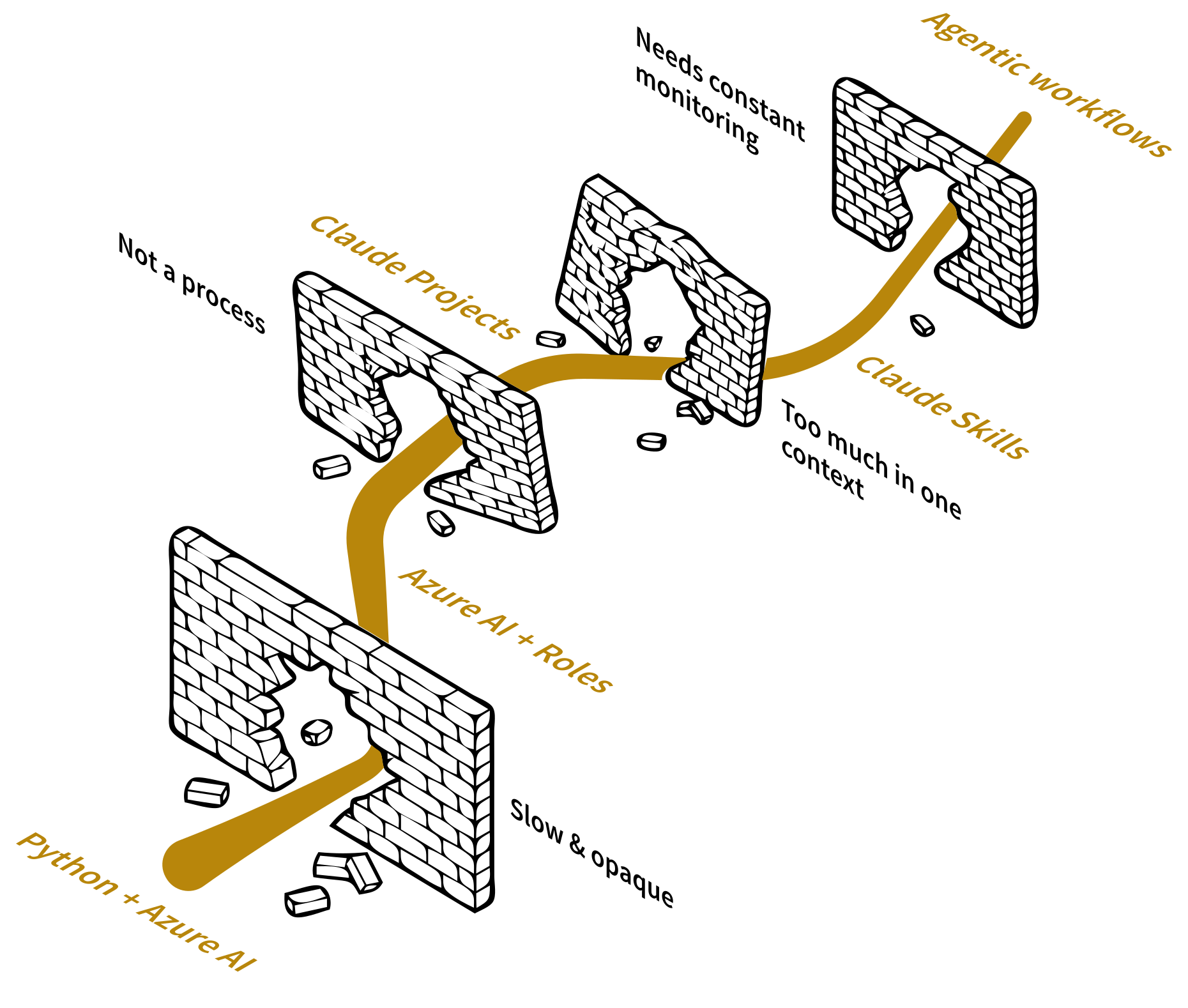
Python scripts against Azure AI APIs (mid/late 2024) — converted outdated specs and structured meeting notes into PRD candidates. Failed on: fire-and-forget black boxes, fixed steps in fixed order, slow, opaque when wrong.
Custom roles — a genuine dead end. A role gives a persona, not a process. The AI kept forgetting where it was. Abandoned quickly.
Claude Projects, template-driven — the first real leap; templates kept the AI on track without pre-determining every step. Failed on: the full PRD process was too much for one context. Projects were hard to share without collisions. Run several features through it and drafts pile up until both AI and user lose the thread.
Skills — the project framework decomposed into small, single-purpose, shareable skills: Confluence search, uploads and updates, impact analysis, PRD creation. First version failed on skills too large, workflows too long. Fixed by decomposition. This is when it became flexible: start from any angle — new PRD, update an old one, view specs from PRD and flow, or flow from views and PRD.
Agentic workflow (current, v2.0) — composes those skills into five roles: design manager, product designer, UX designer, prototype designer, design auditor. Takes a PRD draft to a working interactive prototype.
Every generation failed for a structural reason: rigidity, statelessness, content bloat, over-long workflows. Every fix was architectural, not prompt-tuning.